National Reengagement Initiative (NRI)
The National Reengagement Initiative of New Ways to Work has three main components: Peer learning, technical assistance, and knowledge development.
Peer Learning
The Reengagement Network serves as a key mechanism for peer learning about the most reliable programs and policies to get young people ages 16-24 plugged in to opportunity, across a current membership of more than 600 persons and 35+ operating sites. Membership includes those working in fields such as alternative education, workforce development, juvenile justice, and city government. In existence since 2011, the Network provides a key platform for the Opportunity Youth field through large quarterly virtual meetings and smaller topical discussions. The National Reengagement Initiative of New Ways to Work has three main components: Peer learning, technical assistance, and knowledge development.
Functions of the Network include:
- Inform development of tools and resources using examples from the field
- Promote peer problem-solving as issues arise
- Drive consensus on approaches to topics such as program measurement
- Populate an annual Reengagement Census showing field scope and dynamics
- Generate an audience for meetings ranging from topical webinars and small group discussions to in-person Reengagement Plus convenings or reengagement tracks at others’ conferences
- Inform state and federal policy, and
- Share relevant evaluation and research findings and maintain a dialog with evaluators
As an essential policy response of localities for the past 15+ years, Reengagement Centers and programs have connected tens of thousands of out-of-school and out-of-work young adults back onto pathways that lead to academic achievement, professional skill development and credentials, and employment. In 35 locations nationwide, these programs have provided critical new infrastructure with dedicated staff to support young people to re-enroll in school and progress academically and professionally while attending to a range of developmental needs.
In addition to sustaining large-scale virtual learning opportunities via quarterly Network calls and webinars, interest likely exists among Network members in joining smaller-scale Peer Learning Communities (PLCs). For instance, groups of 15-20 Network members each will likely join PLCs focused on justice-involved youth, state policy, and rural reengagement. In addition, the Network is poised for growth via continued outreach to additional reengagement stakeholders.
Reengagement Technical Assistance
Reengagement technical assistance supports cross-sector local teams to develop and improve policies and practices that position otherwise disengaged young people ages 16-24 to return to education and training, earn key credentials, and join the workforce. The overall goal of technical assistance is to support creating and sustaining additional local capacity, with an eye to helping the millions of young people who do not benefit from limited current programs and educational options, to achieve their full potential.
Reengagement technical assistance envisions scaled-up reengagement efforts in every city. Most frequently this takes the form of adding a new piece of human services infrastructure to the landscape – one with staffed capacity to conduct outreach, assess educational and psychosocial needs, determine a best-fit training, education, or job option, and provide support to gain access to and complete that option. In many cases to date this has resulted in the establishment of a physical reengagement center or network of centers. To meet the scale of demand for additional services and supports, the process includes pursuing realignment of existing public resources, and development of new public and philanthropic resources.
Since 2021, reengagement technical assistance has focused on supporting program planning and development in 16 cities in the southern tier of the US, ranging from Virginia to New Mexico, including a concentration of six cities in Texas. Newport News and Charlottesville, Virginia are in the early planning stages.
In recent years, results have included:
- El Paso, Corpus Christi, and Dallas, Texas have opened new reengagement centers
- Frederick, Maryland plans to open a reengagement center in 2027
The process of technical assistance involves working closely with teams to:
- Form a local team of key stakeholders
- Assess needs and capabilities
- Map populations and services – with Measure of America as a key partner to date
- Engage institutional leaders from cities, school districts, community colleges, workforce boards, and other key youth-serving agencies
- Consult with Opportunity Youth regarding program design
- Create a local implementation plan that address operations and funding, and
- Pursue implementation with tailored support.
Knowledge Development
The reengagement field benefits from regular publication and updating of policy and practice briefs that reflect recent experience in reengagement centers and programs. Also, particularly for more mature reengagement centers and programs, opportunities exist to enlist researchers for evaluation of impact and promising practices.
Reengagement Book
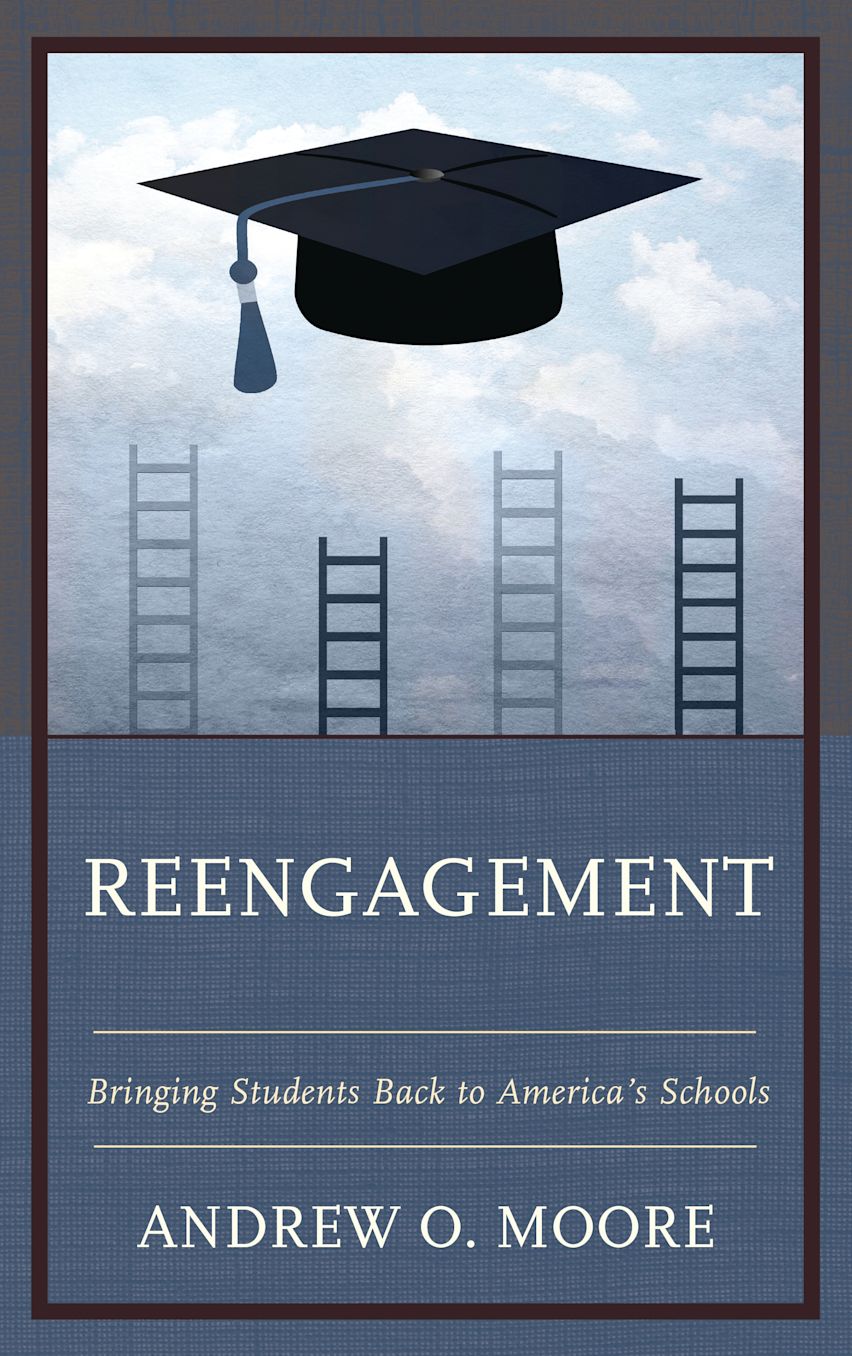 The 2026 publication features all new material that complements and updates the contents of Reengagement: Bringing Students Back to America’s Schools (Rowman & Littlefield, 2016).
The process to develop a second volume to complement the 2016 book, Reengagement: Bringing Students Back to America’s Schools is well underway, with the multi-author manuscript in the hands of Bloomsbury for publication in late 2026. Reengagement, Volume II includes major sections detailing the extensive knowledge development and program evaluation in the field, state policy development, and local program innovation. Promoting the book via conferences such as the RAPSA convening as well as media appearances and solicited reviews will serve to bring continued attention to Opportunity Youth as an issue and reengagement as a solution.
Annual Census
 Conducting an annual census of activity across the Reengagement Network provides an opportunity to learn about Network scale and dynamics. Thank you to the National League of Cities for publishing the most recent census.
About Director Andrew Moore
 Andrew Moore’s career in workforce development spans more than two decades. Andrew has built a nationwide network of dozens of reengagement centers to reconnect tens of thousands of older youth to school and work.
With degrees from Princeton University and the University of Pennsylvania’s Fels Institute of Government, Moore formerly served as Director, Youth and Young Adult Connections at the National League of Cities’ and authored Reengagement: Bringing Students Back to America’s Schools (Rowman & Littlefield: 2016). In his new role, he will lead NRI in serving as a key mechanism for peer learning. Leveraging the most reliable programs and policies to get young people ages 16-24 plugged in to opportunity, the network consists of more than 600 leaders with 35+ operating sites. Membership also includes those working in fields such as alternative education, workforce development, juvenile justice, and city government.